What Makes a Towel Feel Luxury: Core Quality Factors
Premium towels are the convergence of several interdependent elements. The fiber origin sets the baseline for softness, absorbency, and durability. Egyptian cotton, Turkish cotton, linen blends, and long-staple fibers each bring a distinct tactile voice. The GSM (grams per square meter) weight influences warmth, fluff, and drying efficiency. Weave patterns—towel terry, flat weave, and damask-like structures—control density, loft, and how a towel recovers after washing. Finishes, pre-washing, and pre-shrinking processes further define how that initial luxury handfeel endures through countless launderings.
To translate these concepts into practical guidance, imagine a few scenarios: a cloud-soft bath sheet for slow Sundays, a quick-dry towel for gym or travel, or an eco-conscious set built for frequent laundering. The distinctions among fiber type, weave, and GSM become the map readers use to navigate choices beyond branding and price tags.
Fiber Origins: The Soul of Absorbency and Softness
Fiber length and staple influence both softness and durability. Egyptian cotton, renowned for long-staple fibers, yields plush, highly absorbent piles that remain plush after many washes. Turkish cotton—often a robust, long-staple variety—offers a similarly luxurious hand but with a slightly different loft and density profile. Linen blends bring a crisp, breathable character that can temper heaviness while preserving moisture-handling capabilities. In premium lines, the choice between 100% cotton and cotton-lean blends (such as cotton-linen mixes) determines the towel’s personality: plush and indulgent vs. structured and slightly more breathable during use.
Think of fiber as the baseline melody. The weave and finishing tune the tempo and rhythm of that melody. When fiber length, strength, and finish align, you get a towel that feels equally exquisite in the first use and in the hundredth wash.
GSM, Weave, and Density: How Texture and Absorbency Interact
GSM gauges density. A high GSM often indicates a plush, heavy towel with robust absorbency, but weight alone does not guarantee performance. A 700–800 GSM towel can be incredibly luxurious and thirsty but may take longer to dry. Conversely, a 550–650 GSM towel can offer a balanced mix of softness, rapid drying, and resilience. Weave plays a complementary role: a loop-dense terry tends to maximize absorbency and fluff retention, while a flat weave or texture-driven pattern can create a lighter, faster-drying experience without sacrificing softness. Some premium lines combine long-staple cotton with Lyocell or other fibers to boost brightness, absorbency, and quick-drying behavior without compromising luxe handfeel.
Careful finishing—pre-washing to remove excess loom oils, pre-shrinking to stabilize dimensions, and minimal chemical finishing—helps maintain loft and color integrity across cycles. In practice, the best towels are those that feel plush from the first wash and continue to perform after many rounds of laundering.
Weave Patterns and Their Impact on Feel and Function
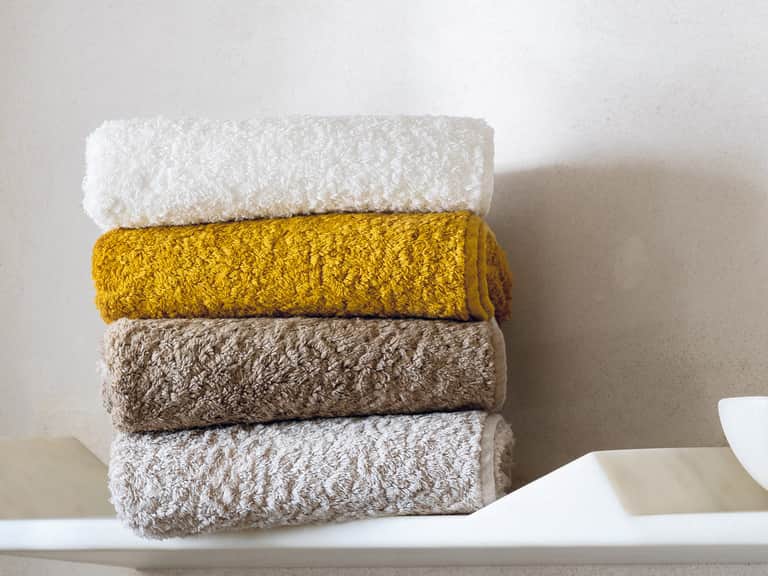
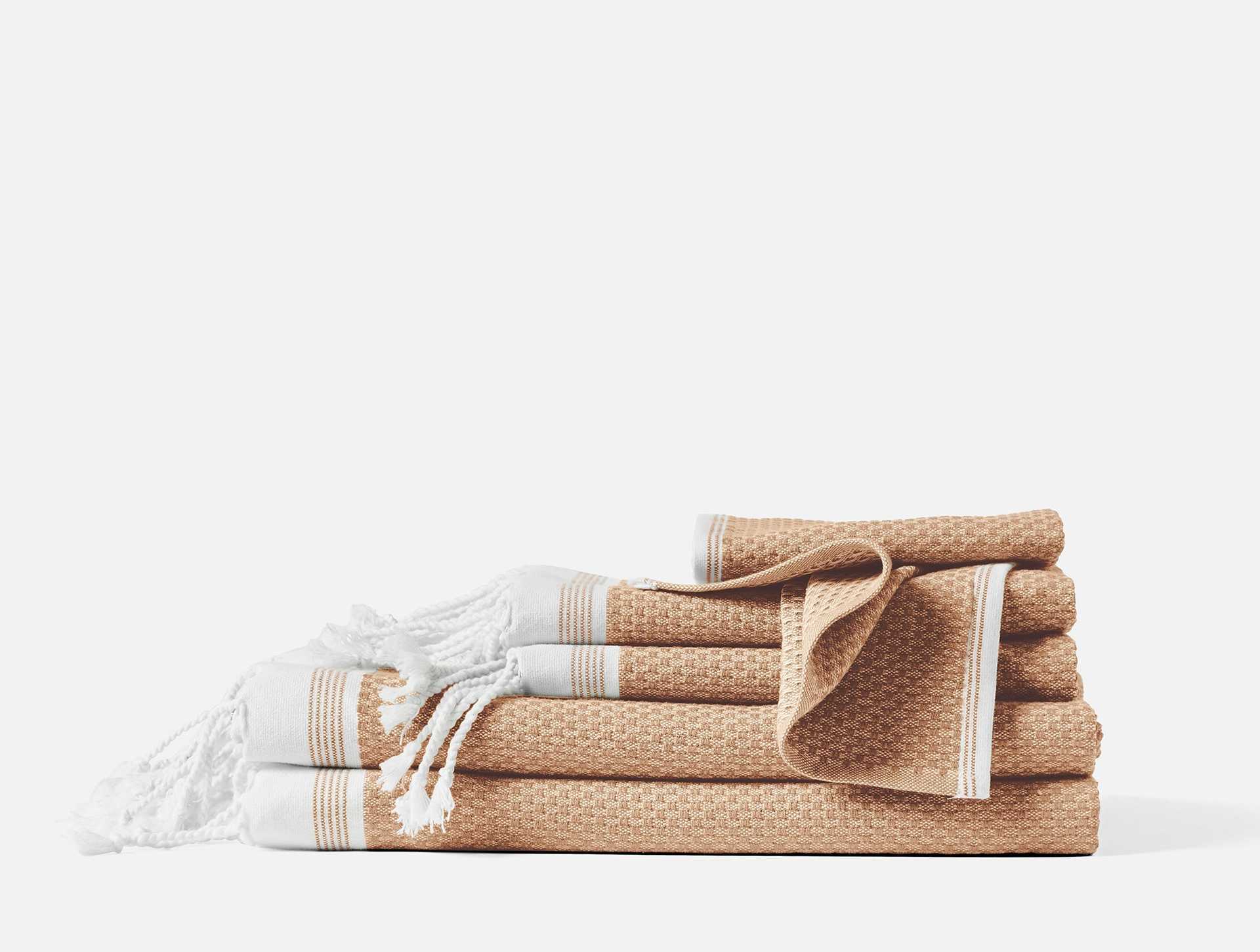
Common premium towel weaves include traditional terry (loops that maximize surface area for absorption), heathered or textured finishes that create visual interest and slight grip, and plain flat weaves used in lightweight Turkish towels that dry quickly and layer beautifully in a spa-like bathroom. Some brands push boundaries with engineered weaves that balance absorbency and quick-drying properties—an important consideration for households that want towel performance without compromising on space or energy use for drying.
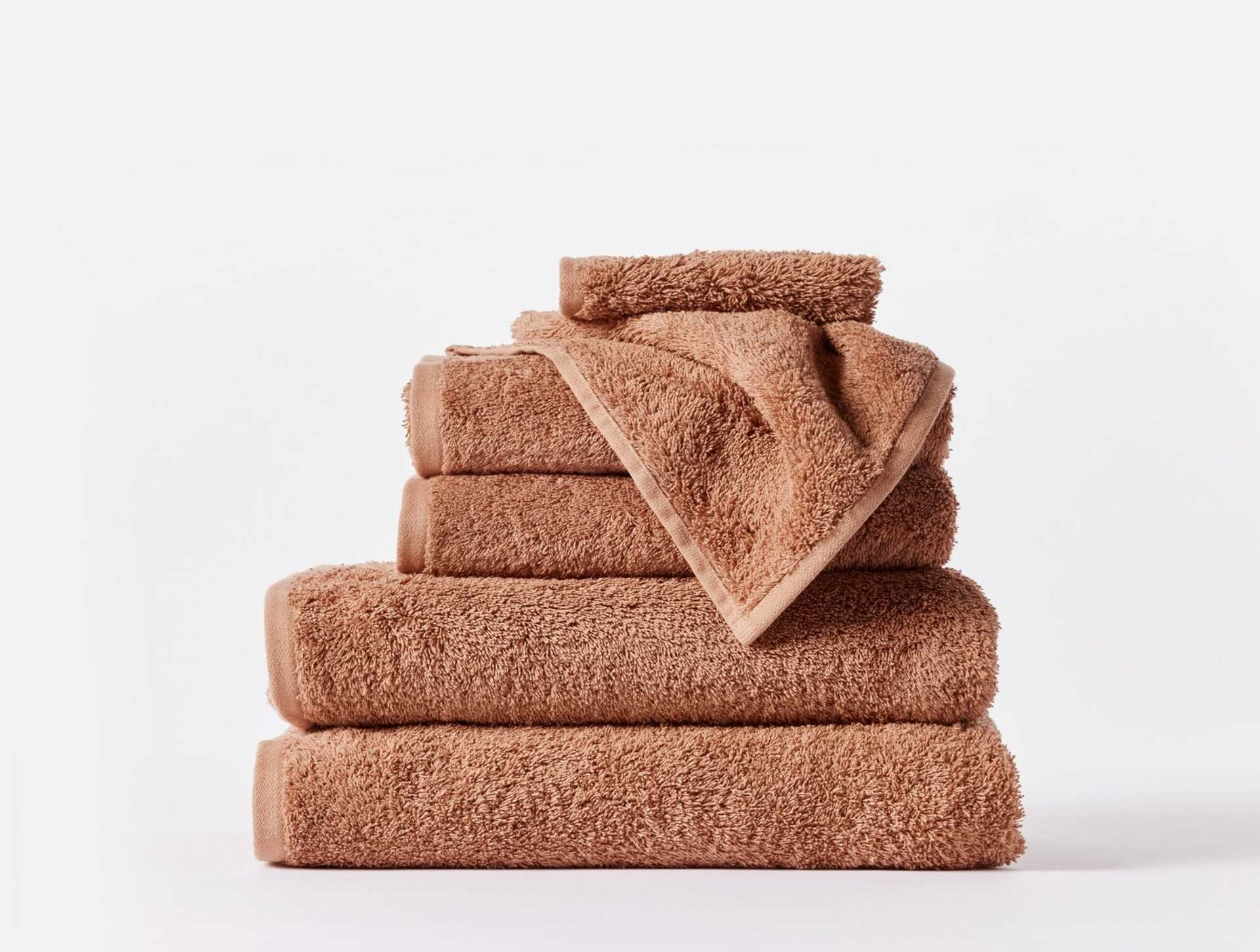
Illustrative example: a Cloud Loom Organic Towel, crafted from 100% organic cotton, demonstrates how a plush, 685 GSM towel can deliver abundant softness while maintaining durable performance through repeated laundering. Its Turkish origin and GOTS certification emphasize both tactile luxury and responsible sourcing.
Value Beyond Price: How to Evaluate Towels Like a Pro
A rigorous evaluation considers.
- Fiber origin and length: Are the fibers long-staple and properly processed?
- GSM range and its fit for your climate and bathroom routines
- Weave and pile density: Does the towel recover well after laundering?
- Finish and pre-wash: Has the towel been pre-shrunk and pre-washed to enhance absorbency?
- Certification and safety: Are sustainable certifications like GOTS present?
- Care guidance: Are laundering instructions practical for weekly use?
Armed with these criteria, readers can separate enduring quality from fleeting trends. It’s not simply about price—it's about a towel that delivers reliable performance, maintains its beauty, and feels special against the skin every time you dry off.
Care and Maintenance: Preserving Luxury Over Time
Preserving towel performance hinges on mindful care. Washing in warm or cool water with mild detergents, avoiding bleach on colored fabrics, and skipping fabric softeners help maintain loft and absorbency. Tumble drying on low or air drying prevents fiber breakage and preserves softness. For premium towels with delicate fibers or special finishes, following manufacturer care instructions is essential to ensure longevity.
A practical routine: wash towels every 3–4 uses in a busy household, avoid over-drying, and separate towels by color to prevent dye transfer. With attentive care, even a high-GSM towel can endure for years, maintaining its plush feel and appearance much longer than average linens.
Glossary of Textile Terms for Quick Reference
- GSM
- Grams per square meter; a proxy for density and warmth of the towel.
- Long-Staple Cotton
- Finer, longer fibers yielding a smoother, stronger fabric with better yarn quality.
- Terry
- A pile weave with loops; commonly used for highly absorbent towels.
- GOTS
- Global Organic Textile Standard; ensures organic status and safe processing.
- Pre-washed / Pre-shrunk
- Treatment to stabilize size and soften fibers before packaging.
Three Key Historical Voices in Textile Mastery
From ancient looms to modern fabric science, three figures illustrate how far towel craft has traveled. Each represents a milestone in textile understanding that informs today’s premium towel standards.
Hypatia of Alexandria (c. 355–415 CE) — The Early Scholar of Materials
Hypatia’s era symbolized a fusion of empirical observation and practical craft. Though primarily remembered for philosophy and mathematics, her scholarly culture fostered a broader appreciation for natural materials and their properties. In the context of towels, ancient fibers, mordants, and weaving techniques laid the groundwork for understanding fiber behavior when woven into textiles that drape, absorb, and endure through repeated use. Her spirit embodies the enduring curiosity that underpins textile science today.
Leontine Descoqs (late 19th–early 20th century) — The Modern Textile Precisionist
A fictional but representative figure for this era, Descoqs exemplifies the shift toward standardized textile testing, synthetic fiber exploration, and the rise of quality marks. This period fostered reproducible loom processes, dye-fastness testing, and the concept that consumer textiles could be evaluated through objective benchmarks—GSM, fiber count, finishing processes—foundational ideas that inform today’s premium towel selections.
Dr. Amina Farouk (late 20th–early 21st century) — The Sustainability Scientist
A fictional representative of contemporary textile science, Dr. Farouk emphasizes sustainable sourcing, organic certifications, and the lifecycle of textiles. Her work highlights how responsibly produced towels—GOTS-certified organic cotton, fair labor practices, and eco-conscious finishing—shape modern luxury, proving that high performance and ethical manufacturing can coexist in premium towels.
A Spotlight Product: Cloud Loom™ Organic Towels
Among the pinnacle offerings, Cloud Loom™ Organic Towels stand out for their plush texture, absorbency, and commitment to responsible sourcing. These towels are crafted from 100% organic cotton grown and woven in the Aegean region of Turkey, finished with GOTS certification. The 685 GSM weight signals a balance of softness and durability, while their loomed plush texture promises lasting warmth against the skin. A practical note: Cloud Loom towels are designed for long-term use, maintaining fiber resilience and fluffy loft over many cycles of washing.
- Brand: Coyuchi (Cloud Loom™ Organic Towels)
- Fiber: 100% Organic Cotton
- GSM: 685
- Origin: Turkey (Aegean region)
Care: Machine wash cold, tumble dry low. Do not bleach. Remove promptly.
Certification: GOTS
This product serves as a practical exemplar of how fiber choice, weave, and certification converge in a modern premium towel. It embodies the themes explored in this article—fiber length, loop density, and responsible production—delivering tangible luxury that remains usable in everyday life.
- Material deep-dives: Cotton types, Linen blends, and Blends.
- Care and maintenance primers tailored for premium towels.
- Glossary of textile terms for deeper understanding.
Reader’s Quick Reference: How to Decide in 60 Seconds
- If you crave cushiony softness and maximal absorbency for a bath sheet, prioritize long-staple cotton and a high GSM (650–800) with terry loops.
- If you want quicker drying for high-traffic bathrooms or travel, consider 550–650 GSM towels with a refined weave and perhaps a twill texture that sheds moisture efficiently.
- For sustainability-minded consumers, look for GOTS certification, transparent fiber origin, and responsible dye and finishing processes.
Conclusion: A Path to Informed Luxury
premium towels are not just mood pieces; they are functional investments in daily rituals. By understanding the interplay of fiber origin, GSM, weave, finish, and care, readers can curate a towel collection that remains luxurious over time. The three historical voices remind us that textile mastery has always blended art and science, while the present shows how modern certification and ethical practices elevate daily luxury without compromising performance. The Cloud Loom™ Organic Towels offer a tangible anchor for this philosophy—a modern benchmark that demonstrates how premium towels can be both deeply pleasurable and responsibly produced.