Textile quality • Organic bedding
Coyuchi Bedding and the Meaning of Organic Textile Certifications
“Organic” can sound like a complete answer on a bedding label. In reality, it may describe a particular part of a product’s journey—from the way cotton is grown to the way fabric is processed. Knowing what a certification covers makes it easier to read claims carefully, compare Coyuchi bedding, and choose textiles that fit your priorities.
Published October 14, 2026
There is an appealing simplicity to the idea of organic sheets: natural fibers, a comfortable bed, and fewer question marks about how the fabric was made. But a finished sheet passes through many hands and processes. Cotton must be cultivated, harvested, spun into yarn, woven or knitted, dyed or finished, sewn, and packaged. A claim about one stage does not automatically describe every stage that came before or after it.
That is why textile certifications matter. They give shoppers a structured way to understand what standards a product or supply chain has been assessed against. They can make organic bedding claims more specific and useful—but they are not all interchangeable, and no single label answers every question about comfort, longevity, environmental impact, or working conditions.
For Coyuchi bedding, as with any brand, the clearest approach is to look at the details for the particular item under consideration. Check the fiber content, the exact certification named, what that standard covers, and the care instructions. Think of the label as a starting point for informed comparison, not a magic stamp that settles every debate.
Why “organic” needs a closer look
In everyday conversation, “organic bedding” may suggest that the entire product is made in an environmentally preferable way. Certification language is more precise. Depending on the standard, a claim may relate chiefly to the agricultural origin of a fiber, or it may also set requirements for stages of textile processing. Other programs address different priorities, such as chemical safety, traceability, or social responsibility.
Those distinctions matter because a fiber claim and a finished-textile claim are not necessarily the same thing. Organic cotton refers to how cotton is grown under applicable organic agricultural rules. A textile certification may extend its scope to processing steps such as spinning, weaving, dyeing, and finishing, subject to the specific standard and certification requirements. Always check the named standard and the product-specific documentation rather than assuming that a broad marketing phrase means every part of production has been audited.
This is not a reason to distrust every organic claim. It is a reason to ask a more useful question: What, exactly, has been certified? That small shift turns a vague impression into something shoppers can compare.
GOTS: a standard with a broader textile scope
The Global Organic Textile Standard, widely known as GOTS, is a textile-processing standard associated with organic fibers. Its criteria cover more than the farm-level origin of cotton. Depending on the product and the applicable certification scope, GOTS addresses requirements across textile processing and includes environmental and social criteria. The details are set by the standard itself, so readers should consult current GOTS information when they need a precise interpretation.
A GOTS reference can therefore help distinguish a certified textile supply chain from a claim that speaks only to the agricultural status of a fiber. Yet it is important not to stretch the label beyond its reach. Certification does not mean that a textile has no environmental footprint, that every possible chemical is absent, or that a product will suit every sleeper. It does not tell you whether a fabric will feel crisp, silky, cool, or brushed against the skin. Those qualities depend on fiber, yarn, weave, finishing, and personal preference.
Also look at how a company presents the certification. Is it clear which product is covered? Is the claim attached to the finished textile, the fiber, or a particular stage of production? A certification name is most helpful when the scope is transparent, and shoppers should be able to distinguish a product-specific statement from a general brand-level commitment.
Fiber sourcing is only one part of the story
Cotton begins as an agricultural crop, and its cultivation has consequences for land, water, and the people who grow and harvest it. Organic agricultural standards generally set rules for production practices and the use of certain inputs. Those requirements are meaningful, but they do not, by themselves, describe every later step in turning cotton into a sheet.
After harvest, cotton is ginned and spun. Yarn is then woven or knitted into fabric, which may be bleached, dyed, printed, softened, or treated before it is cut and sewn. Each stage has its own materials, energy use, water demands, and potential impacts. A fiber-origin claim can tell you something important about cotton cultivation, but you should not automatically read it as a guarantee about dyeing, finishing, factory conditions, or the full life cycle of the finished bedding.
This is where textile certifications with a broader processing scope can add context. They can set requirements for more than the field, though the exact coverage depends on the program and how the product is certified. The distinction is especially useful when comparing labels that use similar words but refer to different parts of the supply chain.
A practical label-reading checklist for Coyuchi bedding
When assessing a sheet set, duvet cover, or pillowcase, take a few moments to move from the headline claim to the product details. This is not about turning a bedding purchase into a research project. It is about making sure the claims line up with the qualities you actually care about.
- Identify the exact fiber. Look for a clear material declaration, such as 100% cotton or a stated blend. “Natural” alone does not identify the fiber or its proportion.
- Find the certification name. If a listing says “certified organic,” see whether it names a standard and describes the scope of the claim.
- Check what the certification applies to. Is the statement about the cotton fiber, the finished fabric, or the product? Avoid assuming that one certified component automatically makes every component certified.
- Read the construction details. Weave, yarn, and finishing influence the fabric’s hand, drape, breathability, and appearance. Certification and construction answer different questions.
- Review care instructions. A textile that needs gentle washing or low-heat drying may require a different routine from one designed for frequent high-temperature laundering.
- Look for specific, current information. Standards can change, and product lines can differ. Use the product page or brand documentation for the item you are considering instead of relying on a broad statement about an entire collection.
The goal is a fuller picture, not a single perfect score. A shopper who values certified processing may prioritize one kind of documentation, while someone focused on feel may spend more time comparing weave and finish. Those priorities can coexist; they simply answer different questions.
Certification does not tell you how sheets will feel
It is easy to let sustainability language take over a bedding decision, especially when labels use reassuring terms. But comfort remains personal. The same sheet can feel cool and smooth to one person, slightly crisp to another, and too light or too substantial to someone else. Certifications are not softness ratings, and they do not replace practical information about fabric construction.
Consider the weave. Percale is commonly associated with a matte appearance and a crisp hand, while sateen often has a smoother surface and more drape. These are broad tendencies, not guarantees: yarn quality, finishing, and laundering all influence the finished feel. Fiber length and yarn construction can also affect surface smoothness and resistance to wear, but no single specification should be treated as a complete predictor of performance.
Thread count is another number shoppers may encounter, particularly with cotton sheets. It can be relevant within context, but a higher figure alone does not establish superior quality. Fiber, yarn, weave, finishing, and honest construction details matter too. The most helpful comparison pairs the certification information with the tactile and practical questions you would ask about any bedding: Will it suit my climate? Does the hand feel appeal to me? Can I care for it as directed?
Care is part of the product’s long-term value
How bedding is washed and dried can shape how it looks and feels over time. Follow the specific care label first, because guidance varies by fabric and finish. In general, avoiding unnecessary heat, using an appropriate detergent amount, and not overcrowding the washer can help reduce stress on household textiles. Fabric softeners and dryer sheets may affect absorbency or surface feel in some textiles, so follow the manufacturer’s instructions rather than adding them automatically.
Longevity matters when considering value. A textile that remains comfortable and usable for many years may serve a household better than one replaced frequently, although no certification can guarantee a particular lifespan. Durability depends on fiber quality, construction, use, and care. Sheets used every night face a different routine from guest bedding that is laundered occasionally.
For organic bedding, responsible care does not have to be elaborate. A steady, sensible laundry routine is more valuable than treating a standard cotton sheet as delicate when its care label does not require it—or using an aggressive wash cycle when it does. Keep the label instructions close at hand, especially for colored or specially finished fabrics.
A useful comparison from Coyuchi’s broader textile range
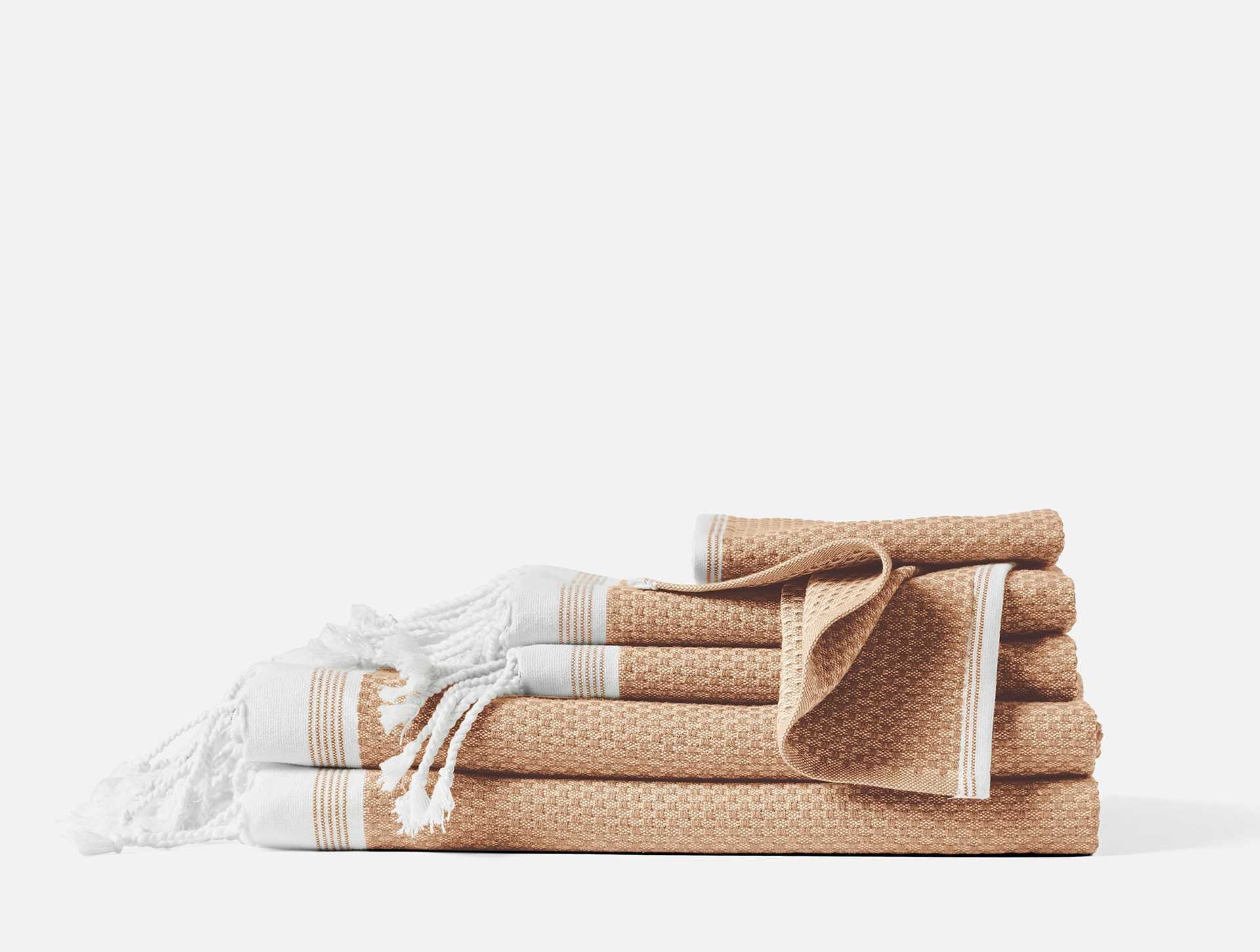
Certification language becomes easier to understand when it is attached to a specific textile. Coyuchi’s Mediterranean Organic Towels, for example, are described as 100% organic cotton, with a lightweight flat weave, a 320 GSM weight, and GOTS certification. The product description also says they are made in a Fair Trade Certified factory.
That example is useful for illustrating how several different kinds of information can appear together: fiber content, construction, weight, certification, and manufacturing context. They should not be collapsed into one claim. GOTS and Fair Trade Certified refer to distinct standards and concerns, and each statement should be understood according to its own scope. The towel’s product details are not evidence about the certification status of Coyuchi sheets; bedding claims should be checked on the relevant bedding product listing.
The same careful reading applies to any home textile. A product can have an appealing material story and still leave practical questions unanswered. Conversely, a clear, narrowly stated claim can be more useful than a sweeping phrase that does not explain what has been verified.
Organic bedding and the bigger picture
Textile choices sit inside a much larger conversation about how goods are grown, made, transported, used, and eventually discarded. A certification can offer evidence that defined requirements have been met within a particular scope. It cannot, on its own, tell you the total environmental footprint of a sheet set or resolve every question about supply chains.
That is why clear language matters. Strong consumer information explains which product is covered, names the relevant standard, and avoids suggesting that one label guarantees perfection. If a detail is not clear, it is reasonable to look for documentation or ask the brand for clarification. Responsible comparison does not require cynicism; it requires matching the strength of a claim to the evidence provided.
It can also help to consider what you will actually use. Choose dimensions that fit your mattress, a weave that suits your preferences, and a fabric you are willing to maintain. Buy thoughtfully rather than choosing by a sustainability word alone. Keeping well-made bedding in use and caring for it appropriately are practical parts of making a household textile purchase last.
Common questions about textile certifications
Does “organic cotton” mean a finished sheet is fully certified?
Not necessarily. The phrase may refer to the fiber’s agricultural sourcing, while a textile standard may cover additional processing requirements. Look for the specific certification and how the product claim is defined.
Does GOTS mean a product has no environmental impact?
No. A certification indicates that a product or supply chain meets defined criteria within the standard’s scope. It does not mean the product has zero impact, nor does it answer every question about its full life cycle.
Does certification guarantee soft or durable bedding?
No. Those qualities depend on fiber, yarn, weave, finishing, construction, use, and care. Certifications address specified production criteria, not a universal promise about feel or lifespan.
How should shoppers compare Coyuchi bedding?
Start with the exact item’s fiber content and named certifications. Then compare weave, construction, care instructions, and the feel you prefer. Treat each product’s claims individually rather than assuming that details for towels, sheets, or another collection apply across the brand.
The bottom line
Organic textile labels are most valuable when they are specific. They can help clarify whether a claim concerns how cotton was grown or whether a standard also covers parts of processing and manufacturing. GOTS is one widely recognized textile standard with a broader scope than fiber sourcing alone, but it should still be read according to its defined criteria—not as a promise of impact-free production or guaranteed comfort.
When choosing Coyuchi bedding, let the certification be one part of the decision. Pair it with the product’s fiber content, weave, construction, and care directions, and verify that each claim refers to the bedding item you are considering. The result is a more grounded way to shop: less dazzled by a label in isolation, and better equipped to choose sheets that make sense for your home, your habits, and your values.