Bath textiles · Quality guide
Graccioza’s 800 GSM Construction: Plushness, Performance, and Long-Term Value
An 800 GSM towel can feel like a little everyday luxury: dense, substantial, and inviting after a bath or shower. But the number on a specification sheet is only part of the story. Fiber, weave, finishing, and care all help determine whether that impressive heft translates into practical comfort over time.
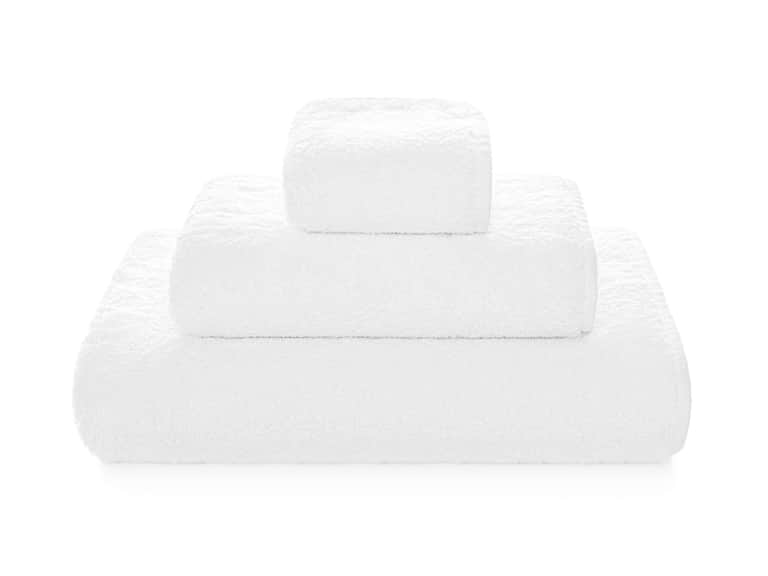
When people talk about a towel feeling “hotel-worthy,” they often mean something specific: a soft surface, enough weight to feel enveloping, and the satisfying sense that it can handle a full drying routine. Graccioza’s high-density towels are designed to make that kind of impression. Its Grand Egoist line is described as 800 GSM 100% Egyptian GIZA extra-long-staple cotton, while the Tecnic line combines cotton and lyocell at the same stated weight.
Those examples reveal why towel quality is more interesting than a single number. GSM can help set expectations about fabric weight, but it cannot tell you everything about absorbency, drying time, softness, or durability. For a useful assessment, consider the whole construction: the fiber that forms the yarn, the way the towel is woven, the finishing it receives, and the care it will need in your home.
What 800 GSM means on a towel label
GSM stands for grams per square metre. It describes the mass of a square metre of fabric. In broad terms, a higher GSM often signals a heavier, denser towel, while a lower number often points to a lighter textile. It does not mean that every towel at the same GSM will feel or perform the same way.
Think of GSM as a helpful starting point rather than a quality score. Two towels can share an 800 GSM specification yet differ in fiber type, loop length, yarn construction, finishing, and size. Those differences change how each towel feels in the hand and behaves after repeated washing. Even the layout of the loops can influence how much surface area is available to meet moisture.
In practical terms, an 800 GSM bath towel is likely to feel notably substantial beside a lightweight, flat-woven towel. The added material can create a plush, cushioned sensation that many people associate with premium bath linens. It may also hold more moisture during use, which can be welcome when drying off but can mean a longer wait for the towel to dry afterward.
That trade-off matters. A towel is not only something you touch once; it is a household textile that must be washed, dried, stored, and used again. The best weight is the one that suits your habits, bathroom conditions, and tolerance for laundry—not necessarily the highest number available.
Fiber choice gives weight its character
Fiber content plays a major role in how a towel feels and performs. Cotton is familiar for good reason: it is widely used in terry towels, where looped yarn creates a soft surface and plenty of contact area for drying. Within cotton, fiber length is one characteristic manufacturers may highlight. Longer fibers can be spun into smoother yarns, although a label’s fiber description alone cannot guarantee a towel’s longevity or performance.
Graccioza’s Grand Egoist towels are described as 100% Egyptian Cotton GIZA ELS, with an 800 GSM construction. The product information also notes pre-washing and pre-shrinking, double-stitched hems, rounded corners, and a sewn-in hanger. Each of those details contributes something different: fiber content speaks to the raw material, while construction and finishing help define the towel’s feel, stability, and day-to-day handling.
The Tecnic towel takes a different route. Its listed composition is 60% cotton and 40% lyocell, and its stated weight is also 800 GSM. The manufacturer describes the lyocell as contributing a smooth hand and subtle luster, while the blend is intended to provide absorbency and a fluid drape. Tecnic is also described as pre-washed and pre-shrunk and crafted in Portugal.
These two lines make a useful comparison without suggesting that one fiber recipe is automatically superior. A cotton-rich towel and a cotton-lyocell blend can each offer a distinctive tactile experience. The relevant question is whether the resulting texture, drape, and care requirements fit the way you like to use bath textiles. If possible, compare the fabric in person; touch often makes differences clearer than a specification alone.
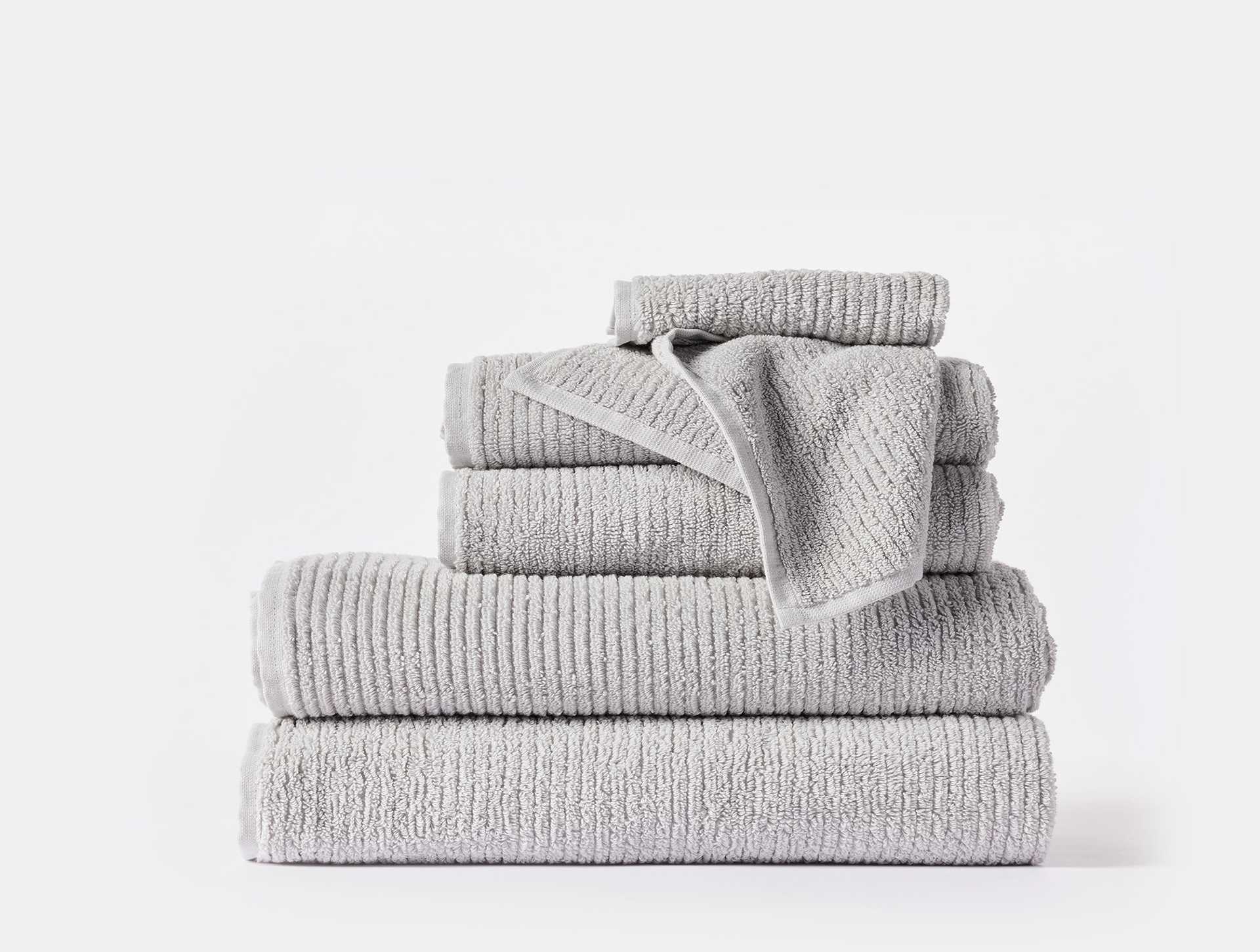
For readers interested in a less weight-focused cotton towel, Temescal Organic Towels provide another point of reference: they are described as long-staple Turkish organic cotton woven in narrow channels, designed to feel soft and absorbent without feeling thick or heavy. Their construction illustrates that a towel can aim for softness and drying performance without relying on a very dense, plush profile.
Loops, weave, and finishing: details you can feel
Many bath towels use terry construction, in which loops rise from the fabric’s base. Those loops increase the surface area available to absorb water and create the familiar textured pile. Loop size, density, yarn quality, and how the fabric is finished all influence the towel’s hand. A thick pile can feel especially soft, but softness by itself does not establish how well the towel will dry between uses or withstand frequent laundering.
Finishing also matters. Pre-washing may help a towel arrive feeling more ready for use, while pre-shrinking is intended to limit later dimensional change. Reinforced hems and careful edge stitching can help the perimeter stand up to routine handling. These features are not a substitute for good fiber and weaving, but they are part of the construction picture and worth noticing when comparing premium bath textiles.
Graccioza Grand Egoist is described as having double-stitched hems and a hanging strap. Tecnic’s product details emphasize its pre-washed, pre-shrunk preparation and blended fiber content. Such information is more useful when read as a set of clues than as a promise of a particular lifespan. Actual durability depends on fabric quality, household use, washing habits, and how the towel is dried and stored.
Color and appearance can matter, too. A bath towel often sits in plain view, so its finish and shade become part of the room’s overall look. But an elegant appearance should be considered alongside function: a towel that suits the bathroom but stays damp for too long may not be the best match for a busy household or a humid space.
The plushness-and-drying-time trade-off
There is a reason a high-GSM towel can feel so inviting. More material can create a fuller hand, a sense of cushioning, and a wraparound quality. For someone who enjoys a slower, spa-like routine or has space for towels to air out, that added heft may be part of the appeal. A dense towel can also feel reassuringly substantial rather than thin or insubstantial.
But plushness comes with practical considerations. A heavier towel can take longer to dry than a lighter one, particularly in a cool, poorly ventilated, or humid bathroom. It can occupy more room on a towel rail and in a linen cupboard, and a full set may make a laundry load heavier. Those differences are easy to overlook when a towel is new and fluffy; they become more noticeable during everyday use.
Absorbency and drying time are related, but they are not interchangeable. A towel may absorb moisture readily and still take a while to release it into the air. Likewise, a lighter, textured towel may dry quickly but feel less enveloping. The ideal balance depends on the environment and routine: a frequently used family bathroom may benefit from quicker-drying textiles, while a guest bathroom or personal retreat may make room for a heavier towel.
Ventilation can make a real difference. Spread towels out after use rather than leaving them bunched, and allow air to circulate around them. If a bathroom stays damp, consider whether a lighter towel or a second towel in rotation would make the routine easier. These practical choices can matter just as much as selecting a particular GSM.
How to judge long-term value beyond the price tag
Premium does not automatically mean valuable, and a high GSM specification does not predict how many years a towel will last. Long-term value is better understood as a combination of comfort, useful performance, construction, care needs, and how often the textile will be used. A towel that feels luxurious but is too slow to dry for your bathroom may deliver less everyday value than a lighter alternative you reach for constantly.
Before settling on a high-density towel, ask a few practical questions. Do you enjoy a thick, plush feel? Is there enough airflow in the bathroom? Can your washer and dryer handle bulky loads comfortably? Do you mind giving towels more space to dry? How often will the towel be used, and will you have another available while it is in the wash?
Then look beyond the headline specification. Check the exact fiber content, construction details, finishing, stated size, and care instructions. These help you understand what you are considering without turning any one feature into a guarantee. Clear, specific information is more useful than broad words such as “luxury” or “hotel quality,” which can describe very different textiles.
Cost per use can also make the idea of value more concrete. A towel used and enjoyed regularly may justify a higher initial outlay better than one that stays folded away. At the same time, buying only the weight or finish that suits your life can prevent you from paying extra for characteristics you do not especially want. Value is personal: it is the point where comfort, performance, care, and price make sense together.
Care that helps preserve the fabric
Even a carefully constructed towel needs sensible care. Follow the product’s own instructions first, because blends and finishes may have specific requirements. Graccioza’s supplied care information for its Grand Egoist and Tecnic towels says to avoid bleach and dry cleaning; it also lists machine washing at 104°F, normal tumble drying, and ironing at 302°F. Always check the current label attached to the towel, since instructions on the product itself should guide its care.
More detergent is not necessarily better. Using an appropriate amount helps rinse residue away; excess detergent can remain in the fabric and affect its feel. Fabric softeners and dryer sheets may also leave a coating on towel fibers, so consider skipping them if a towel’s absorbency seems to decline. If a towel feels different after laundering, review detergent quantity and rinse performance before assuming the textile has permanently changed.
Wash towels with similar items and avoid packing the machine too tightly. Crowding can interfere with thorough washing and rinsing, while rough fasteners or sharp objects may snag loops. For tumble drying, follow the care label and avoid excessive heat. Remove towels when they are dry, then fold or hang them in a clean, dry place.
Some towels may feel different during their first few washes as they settle into regular use. That does not mean every towel’s absorbency will necessarily improve over time; results depend on fiber, finishing, laundering, and the particular construction. When evaluating performance, give a new towel appropriate care and judge it through ordinary use rather than relying on a single first impression.
A quick guide to choosing the right towel weight
There is no universal best GSM for every bathroom. Instead, treat weight as one part of a broader decision. The following questions can help make the comparison more grounded:
- How do you want it to feel? If you prefer a cushiony, enveloping texture, a high-density towel may suit you. If you like a lighter, less bulky feel, compare lower-weight or flat-woven options.
- How quickly must it dry? Consider ventilation, how often the towel will be reused, and whether it can hang fully open between uses.
- What is it made from? Read the fiber label rather than assuming all towels at the same GSM share the same hand or performance.
- How is it constructed? Look for details about terry loops, weave, hems, and finishing where available.
- Can you care for it comfortably? Check washing and drying instructions against your household routine and laundry equipment.
- Will you use it often? A towel should work in the bathroom you have, not just look appealing as a specification on a page.
This approach makes comparisons fairer. A dense 800 GSM towel and a lighter towel are not necessarily competing to do exactly the same job. One may prioritize plushness and heft; another may prioritize compact storage or faster drying. Matching the textile to the situation is more helpful than treating a higher number as a universal upgrade.
What Graccioza’s 800 GSM examples tell us
Graccioza’s Grand Egoist and Tecnic towels show how a shared weight specification can sit alongside distinct fiber choices. Grand Egoist is described as 100% Egyptian Cotton GIZA ELS, while Tecnic is a 60% cotton and 40% lyocell blend. Both are listed at 800 GSM, but their composition and product descriptions point to different tactile identities. That is precisely why GSM should be read with the rest of the label, not in isolation.
For a direct look at the blended option, see Graccioza Tecnic Towels. The product information highlights the cotton-lyocell blend, 800 GSM weight, pre-washed and pre-shrunk preparation, and Portuguese craftsmanship. These are useful details for understanding the towel’s intended character, though your own preferences and bathroom conditions remain central to deciding whether it is a fit.
The broader lesson is simple: a premium bath textile is a system of choices. Fiber shapes the yarn; yarn and weave contribute to texture; weight influences heft; finishing affects the initial feel and stability; and care helps determine how the towel holds up in everyday life. A specification becomes meaningful when those pieces are considered together.
The bottom line on plushness and value
An 800 GSM towel promises a substantial fabric weight and can deliver the plush, enveloping sensation many people seek from premium bath linens. It may also bring trade-offs: heavier laundry, more storage space, and potentially slower drying. Those are not flaws; they are practical features to weigh against the feel and use you want.
Graccioza’s high-density examples underline that weight is only the opening line of the story. Cotton and cotton-lyocell blends offer different material profiles, while finishing, stitching, and care instructions add further context. When comparing towels, look at the full construction and be honest about your routine. A towel earns its long-term value not through a number alone, but through the comfort and performance it continues to deliver in the place where it matters most: your everyday bathroom.
Frequently asked questions
Does 800 GSM mean a towel is more absorbent?
GSM measures fabric weight per square metre, not absorbency directly. A heavier towel may contain more material, but fiber type, loop construction, finishing, and use also affect how it takes up and releases moisture.
Will an 800 GSM towel take longer to dry?
It may take longer than a lighter towel, depending on the construction and drying conditions. Bathroom ventilation, humidity, and whether the towel is spread open all make a difference.
Are all 800 GSM towels equally plush?
No. GSM describes weight, while fiber, yarn, weave, pile, and finishing shape the texture. Two towels with the same weight can feel quite different.
How should I assess the value of a premium towel?
Consider how it feels, how well it suits your drying routine, what its construction details say, and whether its care requirements are manageable. A towel’s value depends on how comfortably it fits everyday use, not weight alone.